Tuesday, March 6, 2012

Porn domain on Internet touches alarm buttons - India

06 mar 2012

Dr Sanjay Kumar Cardiac Cardiothoracic Heart Surgeon India
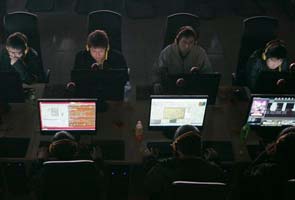
Within three months of the launch of the Internet "pornography" domain ".xxx," 10 cases have been launched against Web pirates registering sites on it using the names of reputable companies and people, insiders said on Monday.

Sources at the World Intellectual Property Organization (WIPO) reported that among complainants to its dispute resolution system over .xxx -- usually called dot-triple x -- were banks, a jewelry business and an online shopping operation.

One individual complaint, against a site called femjoy.xxx, was brought by someone named George Streit, according to WIPO's dispute website. But the sources could not say if this was George Strait, the U.S. country music singer. WIPO officials could also not confirm whether the slightly different spelling was a typographical error.

WIPO, whose Director General Francis Gurry reported on Monday that cases of Web piracy, commonly called cybersquatting, rose 2.5 percent last year involving a record 4,781 sites with nearly 90 percent resolved in favor of complainants.

Many world-famous personalities, such as film star Tom Cruise and soccer player Wayne Rooney, and major corporations and brand names like Barclays Bank and Nestle, have in the past won cybersquatting cases in WIPO.

But these have all been brought against owners of sites registered under well-known and long-established domains such as dot-com, dot-int and dot-org, or the national suffixes identifying countries, including France's dot-fr.

Cyberquatters often register at a nominal fee using commonly known names or brands with the aim of selling them at a profit to the real name-owners. But they also use misleading sites to attract Web surfers to their own products or services.

Dot-triple x came into operation on December 6, 2011, after years of debate within the Internet Corporation for Assigned Names and Numbers (ICANN), on how to control the spread of pornography on the Web and make it manageable.

AID TO PARENTS
Supporters of the idea of a special domain argued that it would enable parents and employers to control more easily the sites to which their children and employees had access by cutting off a single domain rather than separate sites.

Critics said most pornographic site providers might register under dot-triple x -- named after the X used in the past to rate films with sexual content -- but would keep their sites also under dot-com or whatever domain they had used before.

The first case over a site on dot-triple x was brought less than three weeks after it opened with the Turkish online shopping company Markafoni, owned by giant South African multimedia company Naspers, complaining to WIPO over the site markatoni.xxx.

The others have followed this year, with several of them involving more Turkish companies, a major Swedish real estate portal HemNet Sverige over a site called hemnet.xxx and Polish bank BGZ.SA over bgz.xxx.

WIPO officials, who have been running their dispute settlement system for more than a decade, say they expect an additional surge of cases when a range of new domain names approved by ICANN come into use in the coming months and years.

They declined to give details of the cases, apart from the names of the registered complainants, until the expert judges -- usually one per case -- have made their rulings, generally within three months after the case has been filed.

Monday, March 5, 2012

I don't think I am good looking: Neha Dhupia- India

05 mar 2012

I don't think I am good looking: Neha Dhupia

I don't think I am good looking: Neha Dhupia
Dr Sanjay Kumar Cardiac Cardiothoracic Heart Surgeon India
Neha Dhupia
Grounded is the only word that strikes the mind when one comes across Neha Dhupia.
This glam diva absolutely carries no air and offers a warm smile to the people she interacts with. During her recent visit to Ahmedabad, the actor admitted to being touched by the compliments on her beauty.
However, Neha said that the sobriquet really embarrasses her. "I don't think I'm that knowledgeable. I don't think I am that good looking even. I feel embarrassed when people say these things to me," said Neha while interacting with the press.
A disciplined life is what has made all the difference in her life, according to her. And all thanks to "her upbringing", the actor feels she is able to lead a good life. "Thanks to my upbringing, I lead a disciplined life, which is very important," said Neha who feels, "Education is equally important in one's life. You have become an actor doesn't mean that you no longer need to study."
Neha, who's created a niche for herself in Bollywood feels she should have given more time to nurturing the natural athlete in her. "I was majorly into sports - especially, badminton; was very good at it.
On hindsight, I feel I should have given more time to sports. But I really got bitten by the acting bug," says Neha whose favorite sportspersons are Kumar Sangakkara and Rafael Nadal.
Neha, who rose to fame with her movies 'Qayamat', 'Julie' and 'Singh Is Kinng' is currently occupied with her upcoming next 'Maximum' opposite Sonu Sood, brand endorsements and social work.

Sunday, March 4, 2012

Indian women clinch Kabaddi World Cup championship - India

04 mar 2012

Indian women clinch Kabaddi World Cup championship

Dr Sanjay Kumar Cardiac Cardiothoracic Heart Surgeon India
Patna: India clinched the first women's Kabaddi World Cup championship title, defeating Iran 25-19 in the final played at Patlipura sports complex at Kankerbagh on Sunday.

In a thrilling encounter, the Indian eves held upper hand throughout the match and led their Iranian counterparts 19-11 at the half time.

Cheered lustily by the fans at the jam-packed stadium, the Indian women held out a strong challenge by the Iranian in the second half, on course to a resounding win.

Earlier in the day, India outclassed Japan 60-21 while Iran defeated Thailand 46-26 in the two semifinals to set up a summit clash.

Before the semifinals got underway, a clash broke out between a section of spectators and police outside the stadium after some people carrying invitation cards were denied entry into the stadium.

The protesters pelted stones at the policemen who then resorted to baton-charge.

After the final, Bihar Deputy Chief Minister Sushil Kumar Modi gave away the trophy to India captain Mamata Pujari and medals to all members of the winning team.

Cinestar-turned-politician, Shatrughan Sinha, MP from Patalipura, handed over the runners-up trophy and silver medals to Iran, while state Education Minister P K Shahi and the International Kabaddi Federation ( IKF) President Janardan Singh Gehlot gave away bronze medals to Thailand and Japan.

Yuvraj is a fighter and will be fine: Kevin Pietersen - India

04 mar 2012

Yuvraj is a fighter and will be fine: Kevin Pietersen

Dr Sanjay Kumar Cardiac Cardiothoracic Heart Surgeon India
New Delhi: England's Kevin Pietersen has wished Yuvraj Singh a quick recovery and was quoted by the Board of Control for Cricket in India's website as saying that the Indian cricketer 'is a stong bloke.'

Stating that he was looking forward to renewing his on-field friendship with Yuvraj, Pietersen said it was sad to see a fellow professional suffer from an illness. "It’s tragic what’s happened to Yuvi. He’s going through a tough time and it’s not fair to talk about him in terms of cricket at the moment. Right now the only important thing is for him to get back to full fitness as soon as possible."

Yuvraj recently completed his second cycle of chemotherapy and Pietersen said that the flamboyant south paw would be fine. "The man’s a fighter; and he’s one of the most talented cricketers that India has produced. I am in touch with him regularly. He’ll be okay,” he said.
Yuvraj Singh is in Boston where he is being treated for a rare germ cell cancer. He recently tweeted that he was touched by the support from fans and fellow cricketers.

Saturday, March 3, 2012

NRHM scam: Former UP health minister Kushwaha arrested - India

03 mar 2012

Lucknow CBI today arrested former Uttar Pradesh Family Welfare Minister Babu Singh Kushwaha and BSP MLA Ram Prasad Jaiswal in connection with the multi-crore rupee National Rural Health Mission (NRHM) scam in the state.
Kushwaha and Jaiswal are the first politicians to be arrested in the NRHM scam that relates to alleged swindling of over Rs 10,000 crore central funds allocated to the state under the mission.
So far, CBI has arrested 10 persons, including a retired Director General (Family Welfare) S P Ram, General Manager of a state PSU (Construction and Design Services (Subsidiary of Uttar Pradesh Jal Nigam) P K Jain and retired MD of state PSU Shreetron India Ltd G K Batra.
The agency called Kushwaha and Jaiswal at its headquarters here today for detailed questioning. Both arrived at about 11 am and were grilled for about four hours before being arrested by the agency.
Kushwaha, who was expelled from Bahujan Samaj Party (BSP) in December last year, is accused in the case relating to upgradation of 134 district hospitals for an amount of Rs 13.4 crore by Construction and Design Service, a unit of UP Jal Nigam, CBI sources said here.
"The investigation has so far disclosed that the said work was given to a Ghaziabad-based private company on the basis of bogus and forged documents and the material installed in the hospitals were found to be of inferior and sub-standard quality," CBI spokesperson Dharini Mishra said here today.
The agency has so far registered 12 cases involving alleged irregularities to the tune of Rs 370 crore in the utilisation of NRHM fund.
Sources said the work for up-gradation of hospitals was given to M/s Surgiocoin (Ghaziabad-based firm) on the basis of "forged" documents and the material installed in the hospitals were found to be of sub-standard quality.
Prima facie, the agency has found offences of criminal misconduct and conspiracy on the part of the then Minister (Family Welfare) Kushwaha, the then Principal Secretary(Family Welfare) Pradeep Shukla and officials at various levels with private contractors and vendors, they said.
"Huge cash payments were allegedly made by private supplier to the then Minister and his associates in lieu of these contracts. An approximate loss of Rs 5.46 crore was found to have been caused to government exchequer in the said case," Mishra said.
She said investigation carried out so far has indicated that tenders were allegedly awarded in a pre-determined manner to favour certain private firms, at exorbitant rates, in gross violation of established tender procedures, thereby causing
a loss to government exchequer.

"The investigation has also revealed that select private firms were awarded a large number of contracts," she said.

Friday, March 2, 2012

Pakistan censoring web on the lines of 'Great firewall of China' - India

02 mar 2012

Pak censoring web on the lines of 'Great firewall of China'


Dr Sanjay Kumar Cardiac Cardiothoracic Heart Surgeon India

Paris:  Many countries censor the Internet, but few spell out their intentions as explicitly as Pakistan. The government published a public tender last month for the "development, deployment and operation of a national-level URL filtering and blocking System." Technology companies, academic institutions and other interested parties have until March 16 to submit proposals for the $10 million project - but anger about it has been growing both inside and outside Pakistan.

Censorship of the Web is nothing new in Pakistan, which, like other countries in the region, says it wants to uphold public morality, protect national security or prevent blasphemy. The government has blocked access to pornographic sites as well as, from time to time, mainstream services like Facebook and YouTube, Google's video site.

Until now, however, Pakistan has done so in a makeshift way, demanding that Internet service providers cut off access to specific sites upon request. Apparently, that approach has been ineffective, so the government now wants to build an automatic blocking and filtering system, like the so-called Great Firewall of China.

While China and other governments that sanitize the Internet generally do so with little public disclosure, Pakistan is being surprisingly forthcoming about its censorship needs. It published its request for proposals on the Web site of the Information and Communications Technology Ministry's Research and Development Fund and even took out newspaper advertisements to publicize the project.

"The system would have a central database of undesirable URLs that would be loaded on the distributed hardware boxes at each POP and updated on daily basis," the request for proposals says, referring to uniform resource locators, the unique addresses for a specific Web page, and points of presence, or access points.

"The database would be regularly updated through subscription to an international reputed company maintaining and updating such databases," the request for proposals adds.

The tender details a number of technical specifications, including the fact that the technology "should be able to handle a block list of up to 50 million URLs (concurrent unidirectional filtering capacity) with processing delay of not more than 1 milliseconds."

Following the Arab Spring, which demonstrated the power of the Internet to help spread political and societal change, the disclosure of Pakistan's intentions has set off a storm of protest among Pakistani free-speech groups. Opponents of censorship say they are doubly appalled because they associated this kind of heavy-handed approach more with the previous regime of Gen. Pervez Musharraf than with the current government of President Asif Ali Zardari.

"The authorities here are big fans of China and how it filters the Internet," said Sana Saleem, chief executive of Bolo Bhi, a group that campaigns against restrictions on the Internet. "They overlook the fact that China is an autocratic regime and we are a democracy.

"What makes this kind of censorship so insidious is that they always use national security, pornography or blasphemy as an explanation for blocking other kinds of speech," Ms. Saleem said, adding that her site had been blocked for several months in 2010 when it made reference to a ban on Facebook. Access to the social networking service had been restricted because of a page featuring a competition to draw the prophet Mohammed - something that is considered blasphemous by Muslims.

Ms. Saleem said she had tried, without success, to contact the technology ministry's Research and Development Fund, which states that its goal is to "transform Pakistan's economy into a knowledge based economy by promoting efficient, sustainable and effective" information technology "initiatives through synergic development of industrial and academic resources."

She has had better luck approaching Western technology companies - some of whose products, she fears, could be adapted by local Pakistani companies or researchers for what the Research and Development Fund calls an "indigenously developed" project.

Ms. Saleem wrote to the chief executives of eight international companies that make Net filtering technology, asking them to make a public commitment not to apply for the Pakistani grant.

On Friday, one of them, Websense, which is based in San Diego, responded, declaring in a statement on its Web site that it would not seek the contract.

"Broad government censorship of citizen access to the Internet is morally wrong," Websense said. "We further believe that any company whose products are currently being used for government-imposed censorship should remove their technology so that it is not used in this way by oppressive governments."

Websense had previously withdrawn the use of its technology from Yemen after facing accusations from the OpenNet Inititative, a U.S.-Canadian academic group, and other organizations that it had been used by the government of that country to stifle political expression on the Internet.

Governments around the world buy filtering and blocking technology to root out illegal content like child pornography. Some private companies employ it to restrict access to social networks and other distractions on company computers.

But the use of Western technology to restrict political speech in countries with repressive regimes has come under increasing scrutiny in the wake of the Arab Spring. The OpenNet Initiative said in a report last year that at least nine governments in the Middle East or North Africa used such products, with the Western companies maintaining lists of sites to be blocked, ranging from sites featuring skeptical views of Islam to dating services.

Even before implementing its new system, Pakistan has been an active censor. The country ranked 151st, out of 179, on a ranking of press freedom by the Paris-based group Reporters Without Borders in 2011.

"Reporters Without Borders urges you to abandon this project, which would reinforce the arsenal of measures for communications surveillance and Internet censorship that have already been put in place by your government," the group wrote in a letter Friday to Prime Minister Yousaf Raza Gilani.

To free-speech advocates in Pakistan, the government's seeming insouciance about censorship is a particular cause for alarm.

"This is a case study," said Ms. Saleem of Bolo Bhi, which is based in Karachi and whose name means "speak up." "No government has ever done this so publicly."


Thursday, March 1, 2012

Romanian Brothers, Ages Seven and Five, Are Unbelievably Strong - India

01  mar 2012

Romanian Brothers, Ages Seven and Five, Are Unbelievably Strong

Meet Giuliano and Claudi Stroe, two little dudes that certainly have an argument as the world's strongest seven- and five-year old, respectively.
They live in Galati, Romania, about three hours from Bucharest, and what one can only assume are the country's finest gyms. No matter, as the Stroe brothers know how to get work done. They'll put your morning routine to shame. They don't come more adorable than this duo, and this duo thinks your total number of chin-up repetitions is cute, at best. Prepare to be shamed by little boys.

While you started your workout program two months ago, these guys started at two years old, and follow their father, Lulian's, weight routine for two hours each morning. The two are incredibly strong, with Giuliano holding the world record for 90-degree vertical push-ups and the human flag.
Whether it's normal or healthy for their father to be putting them through the routines is another debate entirely, especially when he apparently admits he hopes his sons become stars.
But it's still amazing to marvel at what they're capable of accomplishing.

 http://screen.yahoo.com/world-s-strongest-kids-28330290.html