Sunday, June 12, 2011

When in Goa temples, keep off beachwear - India

12 june 2011

When in Goa temples, keep off beachwear

Beachwear and temples don't get along in Goa. Never mind if it's a top sun and sand holiday destination.
When in Goa temples, keep off beachwear
Dr Sanjay Kumar Cardiac Cardiothoracic Heart Surgeon India

Tourists walk back after swimming at the Anjuna beach in Goa.

The 450-year-old Mahalsa Narayani Temple has banned the entry of foreigners within the temple precincts while the popular Lord Manguesh temple has asked domestic as well as foreign tourists to wear proper attire when they visit the premises.
"We do not mind these foreigners. But sometimes their clothes are vulgar and they do not care about the sanctity of the temples. They need to be disciplined," says Vinod Kamat, who heads the temple committee of the Mahalsa Narayani Devastan, located in the Ponda sub-district, 25 km from here.
Speaking to IANS Monday, Gaurish Kuttikar, a government official who serves as the administrator of the Mahalsa Narayani Temple Committee, said the decision to ban foreigners was completely the prerogative of the temple committee and the government had nothing to do with it.
"They (temple committee) have not approached me nor have they taken the government's permission," Kuttikar said.

Saturday, June 11, 2011

Multiple blasts in Peshawar Pakistan - India

11 june 2011

Peshawar:  Two explosions went off minutes apart in the northwest Pakistani city of Peshawar Sunday, killing 34 people and injuring nearly 100 in one of the deadliest attacks since the U.S. raid that killed Osama bin Laden last month, officials said.

The blasts, one of which was caused by a suicide bomber, occurred just after midnight in an area of the city that is home to political offices and army housing.

The attack took place as CIA Director Leon Panetta and Afghan President Hamid Karzai visited Islamabad, 95 miles (150 kilometers) to the east, to speak separately with senior Pakistani officials about intelligence sharing and efforts to reconcile with the Taliban.

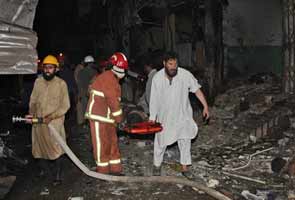
The first explosion was relatively small and drew police and rescue workers to the site, said Dost Mohammed, a senior local police official. A large explosion rocked the area a few minutes later, causing the fatalities and injuring 98 people, 18 critically, said Rahim Jan, a senior doctor at a local hospital.

The second blast was caused by a suicide bomber riding a motorcycle packed with 22 pounds (10 kilograms) of explosives, said Ejaz Khan, a senior police official. The source of the first explosion was unknown.

No group claimed responsibility, but the Pakistani Taliban have pledged to carry out attacks in retaliation for the covert U.S. Navy SEAL raid that killed bin Laden in an army town outside Islamabad on May 2.

Saturday's attack took place across the street from the offices of the top political agent to Khyber, part of Pakistan's volatile tribal region, and only about 100 yards from army housing units. Peshawar borders the tribal region and has been repeatedly hit by bombings over the past few years.

The dead included at least one journalist, said Mohammed Farooq, a hospital doctor. Another four journalists and at least 10 police were injured, he said. Many of the people killed were so badly burned they were difficult to identify.

Jamal Khan, a 22-year-old student, was in his apartment when the first blast went off. He rushed to the scene as the second explosion occurred, peppering his face and arms with flying debris.

"The explosion was so huge I will never forget it all my life," said Khan as he recovered in a hospital. "It was deafening, and then there was a cloud of dust and smoke. When the dust settled, I saw people crying for help and body parts scattered everywhere."

The attack followed a second day of meetings between Panetta, the CIA chief, and senior Pakistani officials. The talks were slated to focus on the size and scope of U.S. intelligence activities in the wake of the raid that killed bin Laden, said a Pakistani official, speaking on condition of anonymity because of the sensitivity of the issue.

The bin Laden operation plunged an already strained relationship between the CIA and Pakistan's main intelligence agency, the ISI, to new lows and threatened cooperation that is key to the U.S. fight against al-Qaida and Taliban militants battling foreign troops in Afghanistan.

The U.S. also needs Pakistan's help to promote and guide negotiations with the Taliban that can help end the decade-long Afghan war. Pakistan and Afghanistan inaugurated a joint peace commission Saturday during a visit by Karzai, the Afghan president.

In an attempt to rebuild their relationship, Washington and Islamabad have agreed to form a joint intelligence team to track down militant targets inside Pakistan, drawing in part from the trove of records taken from bin Laden's personal office during the raid.

Panetta and Pakistani officials planned to discuss what U.S. intelligence officers will be permitted to do, and how many will be allowed into the country as part of the team, said the Pakistani official.

But new suspicions have marred this attempt at renewed cooperation.

As an act of faith to restore relations with the Pakistanis, U.S. intelligence shared the suspected location of explosive material held by the al-Qaida-linked Haqqani network at two compounds in the Pakistani tribal areas, according to a Pakistani and a U.S. official.

The U.S. official said that after the intelligence was shared, the explosive material was moved. The Pakistani official told The Associated Press that they checked out the locations, but nothing was there, and that they intend to investigate to dispel U.S. suspicions that the Pakistani intelligence service had tipped off the militants.

Both officials spoke on condition of anonymity to discuss intelligence operations.

Panetta's visit is his first to Pakistan since the bin Laden raid. His ties with Pakistan will be key in his new role as U.S. defense secretary, presuming he is speedily confirmed by Congress.

The U.S. wants the proposed joint intelligence team under discussion Saturday to pursue a list of five high-value targets it handed to the Pakistani leadership recently. The target list included al-Qaida's military operations chief in Pakistan, Ilyas Kashmiri, who was reportedly killed by a drone strike in the Pakistani tribal areas June 3.

Karzai pressed Pakistan for support in facilitating negotiations with Taliban militants with whom the Pakistani government has historical ties.

There is a significant level of distrust between the two countries, but Pakistan promised to help as Afghanistan sees fit.

"We both want stability in Afghanistan and in Pakistan," said Pakistani Prime Minister Yousuf Raza Gilani in a news conference held with Karzai after the first meeting of the joint peace commission. "Our only aim is to support the peace process, which is Afghan-led."

Friday, June 10, 2011

Ramdev hospitalised , fast continues (also in Hindi)- India

Dr Sanjay Kumar Cardiac Cardiothoracic Heart Surgeon India

काले धन के मुद्दे पर अनशनरत बाबा रामदेव की हालत शुक्रवार रात और बिगड़ गई। बाबा के बिगड़ते स्वास्थ्य को देखते हुए डॉक्टरों ने उन्हें तुरंत आईसीयू से विशेष आईसीयू में स्थानांतरित कर दिया। इस बीच रामदेव के सहयोगी बालकृष्ण को भी हिमालयन अस्पताल में भर्ती कराया गया है

रामदेव का स्वास्थ्य बिगड़ने के बाद उत्तराखंड प्रशासन उन्हें हरिद्वार से देहरादून ले आया था। वह जालीग्रांट स्थित हिमालयन अस्पताल में भर्ती हैं।

योग गुरु रामदेव के प्रवक्ता एसके तिजारावाला ने शनिवार सुबह बयान जारी में कहा कि चिकित्सकीय देखरेख और निगरानी के बावजूद रामदेव के रक्तचाप में गिरावट आई है। कल रात दस बजे से आज सुबह छह बजे के बीच उनका रक्तचाप 80-40 रहा।

उन्होंने कहा कि हम इससे बेहद चिंतित हैं और योग गुरु को अब आईसीयू से विशेष आईसीयू में स्थानांतरित कर दिया गया है। गौरतलब है कि हिमालयन अस्पताल में भर्ती किए जाने के बाद रामदेव की कल विभिन्न तरह की स्वास्थ्य जांच की गई थी।

कल शाम जारी मेडिकल बुलेटिन में कहा गया था कि रामदेव के स्वास्थ्य में सुधार हो रहा है और जिगर को छोड़कर उनके बाकी अंग ठीक तरह से काम कर रहे हैं। उनका रक्तचाप 110-78 पाया गया था। हालांकि रात में उनका स्वास्थ्य बिगड़ गया। (भाषा) 
==============================================================

Thursday, June 9, 2011

Corporate leaders making philanthropic investments in education - India

09 june 2011

Right to education: Class apart

Corporate leaders are making large philanthropic investments in the area of primary education.
Right to education: Class apart
Dr Sanjay Kumar Cardiac Cardiothoracic Heart Surgeon India
Satya Bharti School, Nangal Mundi, has just three classrooms for the students of classes I to V who study here in two shifts. But the rooms are large, airy and clean, and decorated with colourful cut-outs of alphabets and fruits.
The school has six teachers who use aids such as flash cards and instructional CDs played on laptops to teach the around 130 children on the rolls. There's a well-tended lawn, a sand pit and a computer that students are allowed operate on their own. The toilets -- separate for boys and girls -- are squeaky clean. How many primary schools in even the big metros can boast of all these facilities?
Nangal Mundi, however, is no city or even a town; it's a village of 2,000 on the cusp of rural and urban in Haryana's Rewari district. Satya Bharti School, too, is no private schools charging hefty fees, but a charitable one run by the Bharti Foundation, the philanthropic arm of the Mittals, for poor students.
It is vastly superior to the Government Primary School just 50 metres away, where all but one of the dark and stuffy classrooms are locked, and students from classes I to V are taught in one group by a single teacher.
Students don't have textbooks because the government issues are yet to reach, and all that they get as midday meal is a thin broth of porridge with some milk and sugar. The meal served at Satya Bharti School looks hearty in comparison -- roti, chana and aloo-subzi.
"If India has to be the backyard for providing workforce within the country and the world, then education needs to be taken deep into rural India," says Rakesh Bharti Mittal, co-chairman of the Bharti Foundation. And how effective has the effort been?
"In Neemrana, when we first took in students they had bleached hair. But one year in the school and it started turning black, because the mid-day meal the children were getting was probably their only nutritious meal in the day," says he. Mittal also points to the high 96-98 per cent that Satya Bharti students have scored in board examinations in Punjab, Haryana and Rajasthan.
Little Mahima and Ravina at Satya Bharti School in Kohrar, in a remote corner of Rewari, are examples of the transformation education can bring.
Daughters of a small trader and a farmer, respectively, whose fathers had studied till class X and mothers never went to school, the class V students are at the computer, rearranging jumbled-up sentences in English -- shuffling "wall the boy on sat the" to "the boy sat on the wall" -- clicking on each word and dragging it to its right place in the sentence. Their summer vacations are kept short -- they may otherwise forget all they have learnt in school.

Wednesday, June 8, 2011

Anna Hazare's possessions: A plate, a bed - India

08 june 2011

Hazare's possessions: A plate, a bed

Dr Sanjay Kumar Cardiac Cardiothoracic Heart Surgeon India

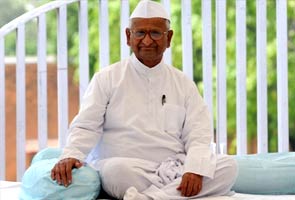
New Delhi:  Gandhian activist Anna Hazare said on Wednesday he lived in a temple in Maharashtra, and his only possessions were a plate to eat food and a bed to sleep on.

Speaking briefly about himself after launching a day's fast at Rajghat, Hazare said: "I have nothing except a plate to have food and a bed to sleep. I have no bank balance."

He said he had not visited his home in his village in Ahmednagar district for 35 years.

"I have three brothers. I don't know the names of their children."


Despite his austere lifestyle, he said he was "a very happy and contented man".

Hazare also told the cheering crowds that he had "claimed the wickets of six cabinet ministers" in Maharashtra over corruption. His efforts had led to the sacking of more than 400 corrupt officers.

"I am fighting big goondas... One of the ministers (who lost his job) gave out a 'supari' (underworld contract) to kill me."

He said his life changed when, at age 26, he came across a book by Swami Vivekananda. "I decided then and there to live only for the welfare of the country and the society."

The values important in life, he said, were noble thought and honesty.

Tuesday, June 7, 2011

Sikh in US attacked, called 'Osama's brother' - India

07 june 2011

Sikh in US attacked, called 'Osama's brother'


New York:  In a "bias" attack, a Sikh man lost three of his teeth after being sucker-punched in a moving train in the US by a man, who accused him of being related to slain Al Qaeda chief Osama bin Laden.

Jiwan Singh, who came to America 30 years ago and is an employee of the Metropolitan Transportation Authority (MTA), was attacked on the US Memorial Day on May 30, The New York Daily News reported.

"He was saying, 'You are the brother of Osama,", the 59-year-old Singh was quoted as saying by the news website.

"I said, 'I am not Osama. I have nothing to do with him!"


The daily said the Sikh MTA employee was riding a train to work in Brooklyn from his home in Richmond Hill on Memorial Day when a hate-spewing straphanger accused him of being related to bin Laden and then sucker-punched him.

The father of five said his son, Jasmir, 23, had also lost an eye after being stabbed by attackers in 2009 who targeted him because of his turban and traditional beard.

"We are Indians," he said, recalling other "Osama" slurs he's endured because of his long, white beard.

"Due to that...I have suffered so much, my family has suffered so much, my community has suffered so much."

Singh, an electrical engineer, said the recent attack happened about 11:30 pm and described the attacker as a black man in his late 20s.

Talking about the incident, he said the car was half-empty, but the man walked right up to him and demanded he give up his seat.

Singh said he was nervous, but pointed out that there were other open seats nearby.

He said the man grabbed him by the shirt collar, picked him up and threw him into one of those seats.

"He said, 'Taliban, you sit there!'" Singh recalled.

The attacker then stared down Singh - sometimes cursing him out loud, other times muttering under his breath.

As the train pulled into the next station, Kingston Avenue, the man suddenly threw two quick roundhouse punches, Singh said. Both hit him square in the mouth.

"He said, 'This is for you, Osama!'" Singh recalled, the daily said.

The New York Police Department hate-crimes task force is investigating it as a bias incident, an unnamed police official was quoted as saying.

Monday, June 6, 2011

Royal couple to get new London digs - India

06 june 2011

Royal couple to get new London digs


Dr Sanjay Kumar Cardiothoracic Cardiac Heart Surgeon Surgery India

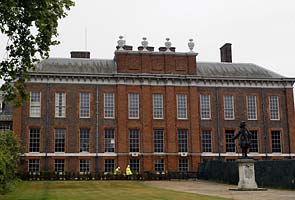
A view of the Kensington Palace in London. (AP)
London:  Most everyone wants a pied a terre in London, a fine city that showcases the arts and music and at times fine food. But only a select few can get a small renovated apartment in Kensington Palace to call home when they are in town.

It's one of the perks of power for Prince William, second in line for the British throne, and his bride, the former Kate Middleton. The finishing touches are being put on their new apartment, which will be their official London residence for the next year while they seek out larger quarters.

Not bad for a couple still on the south side of 30.

The Duke and Duchess of Cambridge, as the couple is officially known, plan to move into the refurbished apartments before embarking on their first official overseas trip to Canada and the United States later this month.

Their primary residence will still be a small house on the remote island of Anglesey off the coast of northwest Wales where William serves as a Royal Air Force helicopter rescue pilot.

But Kensington Palace will be their base on their visits to London, which in the past has included late-night clubbing visits but in the last year has focused more on family-oriented events.

William has strong ties to Kensington Palace - he lived there as a child, first with his parents, before their divorce, and then with his mother, the late Princess Diana, who used it as her primary residence until her death in 1997.

The palace is being extensively renovated. Much of it has been gutted in part so it can be brought up to current health and safety standards.

Other royals also live in the palace, which is broken up into a number of apartments. They share a spectacular flower garden built around an ornamental pool.

The late Princess Margaret, the queen's younger sister, lived there for many years in spacious apartment 1A, which enjoyed a private walled garden.

Joe Little, managing editor of Majesty magazine, said there had been reports that the remaining royals would be relocated and the palace turned into a museum.

"For many years there were a lot of royal aunts and uncles there," he said. "There aren't too many options for Kate and William in London without buying something new, and with the cost of security that's not going to happen."

With the height of the summer season approaching, royal officials said Monday that Middleton's famous wedding gown will be put on public display when Buckingham Palace is opened for tourists from July 23 until October 3.

Buckingham Palace is the official London residence of Queen Elizabeth II, who allows tourists to visit some of the palace's state rooms during the summer months.

The tour also includes a display of some paintings from the queen's extensive art collection. Works by Rembrandt, Rubens and others are on display.

The much-praised dress was designed by Sarah Burton of the Alexander McQueen fashion house.
Royal collection officials said the special exhibit will also display the veil, tiara, shoes and diamond earrings worn during the April 29 wedding.

The diamond-and-sapphire engagement ring she has been wearing since November will not be part of the display - it is still on her finger, recently displayed at the Epsom Derby horserace she and William attended Saturday.

The state room tour, which will include the wedding gown and accessories, typically costs 17.50 pounds ($29).